

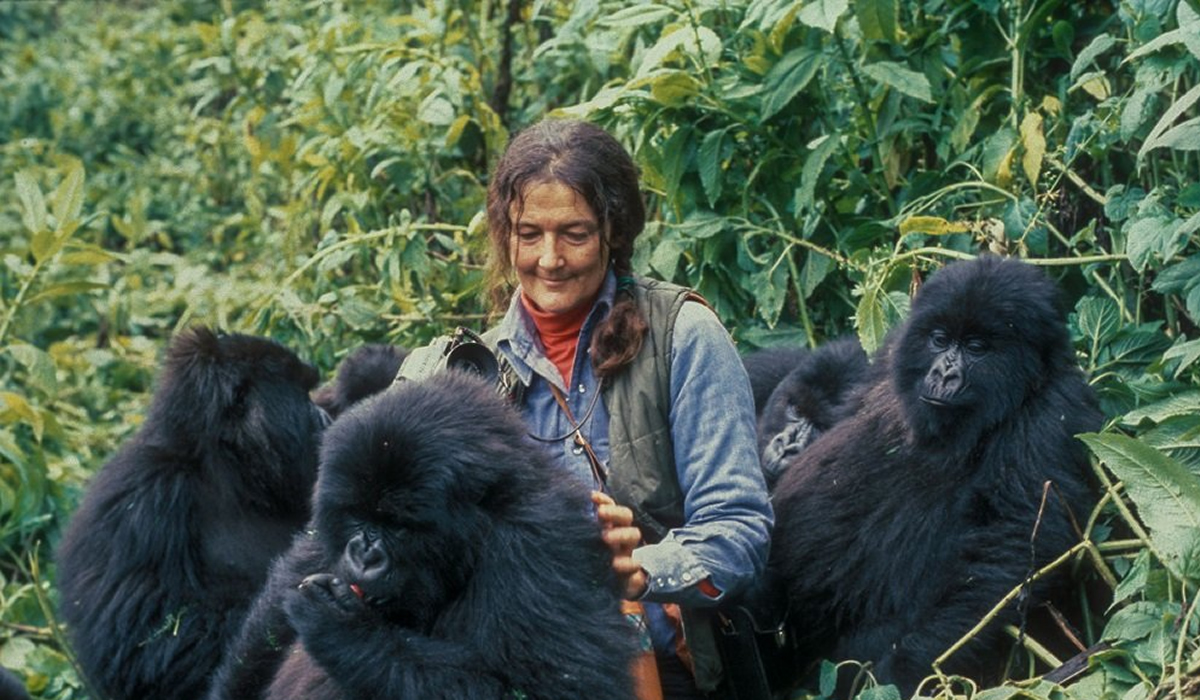
Dian Fossey remains one of the most influential figures in wildlife conservation and primatology, especially in relation to mountain gorillas in Rwanda. Her life, work, and legacy are deeply connected to the misty slopes of the Virunga Mountains, where she dedicated nearly two decades to studying and protecting these endangered primates. For tourists visiting Rwanda with Verdant Safaris, learning about Dian Fossey adds powerful meaning to gorilla trekking experiences and offers a deeper understanding of conservation efforts that continue to shape the region today.
Born in 1932 in San Francisco, Dian Fossey developed an early interest in animals and nature. However, it was not until a life changing trip to Africa in the early 1960s that her passion for gorillas truly emerged. During this journey, she visited several African countries and encountered mountain gorillas for the first time in the Virunga region. The experience inspired her to return to Africa and commit her life to studying and protecting these gentle giants. This decision would later transform global awareness of mountain gorillas and their fragile existence.
In 1967, Dian Fossey established the Karisoke Research Center in Rwanda, located between Mount Karisimbi and Mount Bisoke, from which the name Karisoke was derived. This research center became the foundation of her groundbreaking work on mountain gorilla behaviour. Living in remote and challenging conditions, she conducted long term, close range studies that were unprecedented at the time. Through patience and dedication, she habituated several gorilla groups, allowing her to observe them without disturbing their natural behaviour.
Dian Fossey’s research provided invaluable insights into mountain gorilla social structures, communication, parenting, and emotional bonds. She revealed that gorillas were intelligent, gentle, and highly social animals, challenging the widespread myths that portrayed them as aggressive and dangerous. Her findings helped shift public perception and built global empathy for gorillas, which later became essential in mobilising conservation support. For tourists on a Rwanda gorilla trekking safari, these insights enhance appreciation for the calm interactions observed in the forest today.
Beyond research, Dian Fossey was a fierce advocate for conservation. During her time in Rwanda, mountain gorillas faced severe threats from poaching, habitat loss, and political instability. Fossey actively opposed poachers, often dismantling traps and confronting illegal hunters. Her methods were controversial, but her commitment to protecting gorillas was unwavering. She believed that without strong action, mountain gorillas would disappear within a few decades. Her work laid the groundwork for modern conservation strategies in Volcanoes National Park.
Dian Fossey also played a crucial role in training and working alongside local Rwandans. She employed and educated community members, building local capacity in conservation and research. Although her relationships with authorities and communities were sometimes complex, her efforts contributed to the long term involvement of local people in protecting wildlife. Today, community based conservation is a cornerstone of Rwanda’s successful gorilla protection model, benefiting both wildlife and local livelihoods.
In 1983, Dian Fossey published her book Gorillas in the Mist, which became an international bestseller. The book combined scientific observation with deeply personal storytelling, bringing readers into the world of mountain gorillas and the challenges of conservation in Rwanda. The later film adaptation further amplified her message, reaching global audiences and inspiring generations of conservationists and wildlife enthusiasts. Many tourists visiting Rwanda first learn about Dian Fossey through this book or film, sparking their interest in gorilla trekking and conservation tourism.
Tragically, Dian Fossey was murdered in 1985 at her cabin near the Karisoke Research Center. Her death shocked the world and underscored the dangers faced by conservationists working in remote and politically sensitive regions. Although the circumstances surrounding her death remain unresolved, her legacy continues to influence conservation efforts across Africa and beyond. She was buried near the gorillas she loved, alongside several that were killed by poachers, a testament to her lifelong dedication.
Today, Dian Fossey’s impact is evident in the survival of mountain gorillas. From a population of just a few hundred during her time, mountain gorilla numbers have gradually increased due to sustained conservation efforts. Rwanda, together with Uganda and the Democratic Republic of Congo, now protects these primates through coordinated conservation programs. Gorilla trekking permits fund park management, research, and community development, making tourism a vital tool for conservation. Tourists visiting Rwanda with Verdant Safaris directly contribute to this success story.
The Dian Fossey Gorilla Fund International continues her work through research, protection, and education. Operating in Rwanda, the organisation supports anti poaching patrols, scientific studies, and community initiatives around Volcanoes National Park. The Ellen DeGeneres Campus of the Dian Fossey Gorilla Fund, located near the park, serves as a hub for conservation, learning, and collaboration. Some Rwanda itineraries include visits to the campus, offering tourists an opportunity to learn more about ongoing conservation efforts inspired by Fossey’s vision.
For tourists planning a gorilla trekking safari in Rwanda, understanding Dian Fossey’s story adds emotional depth to the experience. Standing in the rainforest, observing a gorilla family at close range, many tourists reflect on the sacrifices made to protect these animals. The rules followed during gorilla trekking, such as maintaining distance and limiting group sizes, are rooted in principles that Fossey championed to safeguard gorilla well being.
Dian Fossey’s legacy also highlights the complex relationship between conservation, tourism, and local communities. Modern conservation in Rwanda emphasizes balance, ensuring that tourism benefits nearby communities through revenue sharing, employment, and infrastructure development. This inclusive approach has helped reduce conflict and foster local support for wildlife protection, creating a sustainable model that contrasts with the challenges Fossey faced during her time.
Verdant Safaris integrates this rich conservation history into its Rwanda safari experiences. By providing knowledgeable guides and well planned itineraries, the company ensures that tourists not only see mountain gorillas but also understand their story. Learning about Dian Fossey during a safari encourages responsible tourism, respect for wildlife, and appreciation for Rwanda’s conservation achievements.
Dian Fossey is far more than a historical figure, she is a symbol of dedication, courage, and the enduring power of conservation. Her work transformed global understanding of mountain gorillas and helped prevent their extinction. For tourists visiting Rwanda, her legacy is woven into every gorilla trekking experience, every protected forest, and every conservation initiative. With Verdant Safaris, tourists can explore Rwanda with a deeper awareness of Dian Fossey’s influence and the remarkable journey of mountain gorilla conservation in the Virunga Mountains.